The Newsletter Shutdown has ended!
Two months of topics? No, but we touch on the government shut down, cockroaches and private credit markets, stablecoins and Argentine beef. As always, a musical interlude! Or two!
Government Shutdowns
I had planned to bring the newsletter back from its late summer hiatus right when the government shutdown ended. But better to get this out now, as if I waited for the government shutdown to end you could be reading this at Christmas - and I wouldn’t want the newsletter to interfere with my equally long-winded Christmas card! In any event, It is a particularly odd facet of our government shutdowns that the government picks and chooses which employees to (i) furlough, (ii) force to work for no pay, and (iii) pay normally. And luckily for Meghan and me, the Veteran’s Administration is funded for an entire year in advance, which means there are no furloughs or unpaid work throughout the VA system. Not bragging (nor complaining about the VA employees continuing to get paid), but rather highlighting that the various things which “can’t be funded” (i.e. environmental regulators, air traffic controllers, active military pay, SNAP benefits) are specific political choices made by our politicians to try and win political points. As you all probably know, other politically-stable, developed countries (if we still fall into that camp) don’t really engage in this sort of nonsense (with the closest parallel being Northern Ireland; hopefully the parallels can stop here). In Australia, one shutdown was sufficient for the Prime Minister to be summarily fired, followed shortly thereafter by all of parliament.
In Germany, collapse of the government means snap elections and regular spending continues at the same levels. Thank goodness - as Germany is now in a position to pay our troops (maybe?) and civilian workers who are not receiving their regular pay. It would be pretty fucking embarrassing, if shame still existed in the US government. In the Vatican City, as you may remember from just a few months ago, when the “government” collapses, they lock all the Cardinals into the Vatican until they pick a new pope. And I’ve yet to see a compelling (or even a coherent) economic argument that these shutdowns “save” money (especially since, typically, after the shutdown, the furloughed workers are given back pay for time when they weren’t working). I look forward to one of our political parties advancing legislation that will do away with government shutdowns (and the debt limit as well).
There are tons of good options, hinted at above. Obviously we could start with locking all Senators and Representatives in the Capitol. And the entire legislative and executive branch should actually forfeit their pay, the pay of their entire staff, and their respective health insurance for as long as the shutdown lasts. Perhaps each day of a government shutdown results in a fine of 10% of the Representatives' campaign coffers? Or make it a “real” shutdown – where all air travel stops (so Representatives aren’t flying back and forth either, all imports are stopped at customs (i.e. immediate consequences that cause significant pain). Not that I enjoy pain, but I assume snap elections, which would be a preferred result, would require a constitutional amendment. I am confident the Democrats and Republicans will focus on this as soon they finally pass a bill prohibiting Senators and Representatives from trading individual stocks and using non-public information.
A story you may have missed (unless you follow New Jersey politics), where the Democratic gubernatorial candidate Mikie Sherrill (late update: She won.) was targeted with accusations of insider trading (in part because her husband works on the equities desk at UBS). Funnily, Mikie Sherrill had, in fact, co-sponsored the most recent bill to prohibit Congressional stock trading – but that did not dissuade a plethora of attacks from both her opponent and various (affiliated) SuperPACS. But I loved her response – she released a super detailed list of her family’s assets. Which is awesome for a few reasons: (i) she basically only holds ETFs and mutual funds (yay!), (ii) she and her husband diversify away from UBS soon after he receives his stock awards, (iii) they have (what appear to be) thoughtful diversification and tax-efficient allocations (e.g. all the bonds are in their tax deferred accounts, although I can’t say I understand $30,000 in a gold ETF as part of an almost $10M portfolio), and (iv) this disclosure will hopefully encourage Congress to require more detailed disclosures anyway.
When you see one cockroach, there’s probably more.
- Jamie Dimon
A good opportunity to bring back “Quote of the Month” as this common saying was Jamie Dimon’s response to some recent credit blow-ups (specifically mentioning the Tricolor bankruptcy. Tricolor was subprime auto-lender and dealership operator (i.e. used car salesman writ large) that failed in mid-September and entered Chapter 7 bankruptcy (a liquidation, not a restructuring) under a cloud of fraud accusations. And there are definitely other cockroaches scuttling about (the most famous one is First Brands, a car parts supplier that filed for bankruptcy in late September again a potential culprit being “opaque off-balance sheet financing”, and late update, they are now suing their founder alleging fraud). Ok, so if there are more cockroaches, the next question: is that a portent for a broader credit collapse (not repeating, but perhaps rhyming with 2008-2009)? or is it just signaling the need for a visit by an exterminator (Fed Reserve rate decrease pause? Increased regulations? Better diligence by the banks?). I suspect it’s less a portent of a near-term crisis and simply a symptom of an economy where lower income consumers are under significant stress. People frequently refer to this as a “K shaped economy” (where the wealthy are on the top leg of the K, going up, and middle classes and wage earners are on the bottom of the leg, headed down). But irrespective of a cute name, what is concerning to me that it suggests that the pain of various policy decisions is not being felt by the decision makers. And, of course, the problem grows, out of sight (and apparently, out of mind) until it ultimately does blow up in some fashion. Which is, of course, what Dimon’s remark was designed to highlight. Of course, I am not sure any policy makers are paying attention, given that we are a month into a government shut down where a significant number of people are NOT getting their paychecks and the administration has decided to try to withhold food assistance from ~40M Americans (this is bouncing around a lot, so who knows where we are when you read this!). If a subprime auto lender can’t survive when poor people were getting nutritional assistance…I guess, I’d just say that I doubt the delinquency rates are going to improve now. Not to mention, the new health insurance premiums have recently been publicized and there are a lot of potential used car payments that will be directed toward health care premiums, if the subsidies aren’t reinstated.
The other point which I love about these stories is the implication for whether we (us individual investors) should be investing in “Private Credit” (both Tricolor and First Brands were privately-held companies). I am sure you remember from the Episode 6 newsletter that “Private Credit” is the rebranded junk bonds shiny new asset class that (according to all the asset managers and fund managers) should be a part of each individual investors’ 401(K). Perhaps I am too cautious, but I’m afraid I might end up with a cockroach that these big banks and asset managers want to get rid of!
That is our musical interlude - Joe Pug's "I don't work in a bank", linked here again in case the embedded YouTube clip above doesn't work. Fun little song, to hopefully alleviate some of the boredom of bank regulatory regimes below.
Stablecoins are Banks.
Speaking of banks, stablecoins have been in the news recently. What is a stablecoin? Well, one way to describe a stable coin is a cryptocurrency token always worth a particular amount of “money” (typically dollars). For example, a stablecoin issuer (Tether is the most famous one and comprises 70% of the market) promises that you can use their coin to transact (without risk of a fluctuation in value like happens with other cryptocurrencies) and it will always redeemable for the same amount of money. Typically, the stablecoin issuer claims that it is backed with various other financial instruments (Treasuries, Cash Deposits, super safe corporate bonds even). Now you might think: “Wait, I thought that the point of cryptocurrencies is that they are NOT tied to fiat money like Treasury Bonds or US dollars”. Well, yeah. It’s kind of a weird concept compared to the initial cryptocurrency concept. But beyond that, it is also weird because what I just described is basically just a early-stage-of-development bank; it is just that the currency issued by those early banks was not called a stablecoin but rather a banknote. Of course, early banks (before central/national banks were formed) were “required” to back up their banknotes with hard currency (gold/silver etc.). But banks (even central banks) failed (or almost failed) pretty frequently as, for various reasons, people lost faith in the banknotes (which then typically resulted in depositors seeking to redeem the notes for the hard assets held by the bank (see below for note about fractional-reserve banking which is closely related). For example, you can read about the Panic of 1896, the Panic of 1893, the Panic of 1857, the Panic of 1837 (NB: I love the Wikipedia disambiguation: “Not to be confused with the Panic of 1873”), etc. etc. etc. or, since it's almost the holiday season, you can just re-watch It’s a Wonderful Life.
But one stablecoin story making the rounds is a pretty good example on how they function as a bank – that is how the stablecoin connected to the Trump family (USD1) was used by an Abu Dhabi sovereign wealth fund to make a $2B investment into Binance. To be clear, USD1 is a stablecoin that is merely “connected to” the Trump family through a licensing deal (described as “The Dollar, Upgraded”): it shouldn’t be confused with the Trump Family’s other cryptocurrency token, the WLFI, issued by World Liberty Financial, nor with the $TRUMP coin, which was the coin tied to the dinner hosted by Trump at Mar-a-Lago earlier this year. And none of those are connected to $MELANIA (a coin which spiked to almost $8.50 for a hot minute before the inauguration in January, allowing its original holders to cash out, and is now worth about 10 cents). Some people were raising their eyebrows that the relatively new USD1 stablecoin was used for Abu Dhabi’s $2B investment in Binance (as compared to Tether’s USDT). I was more surprised about the investment generally. After all, Binance and Changpeng Zhao (its founder and chairman, known as CZ) had both, just a few months before, pled guilty to various money laundering and bank secrecy violations, resulting in Binance forfeiting $4B and CZ serving 4 months in prison. Whaaaat? President Trump pardoned CZ shortly after the $2B investment using the USD1 coin was consummated? Hmmm. Well it is surely on the up-and-up, since Trump now says he doesn’t even know Zhao. Probably it was just Trump’s attempt to mend fences with our northern neighbor by pardoning the world’s wealthiest Canadian citizen. Whaaaat? Trump is angry about Canadian funded TV ads starring Ronald Reagan's thoughts on tariffs and refuses to engage in trade negotiations with Canada now? Hmmm. Well, then I guess that was just coincidence. In any event, it was good example of how stablecoins are used as a bank to transfer significant sums, though I don’t suppose that World Liberty Financial is going to be top of the list for regulatory attention for unlicensed banking by the OCC, the FDIC, or the Federal Reserve Board (our typical bank regulators).
The other story (although less newsworthy perhaps) was a somewhat “funny” story about a fat-finger error – where a stablecoin issuer created an extra $300 trillion of PYUSD (the Paypal branded stablecoin). That was, indeed trillion with a T, and not a typo (although I am sure there are a few of those scattered about!). For comparison, the total circulation of US dollars is only $2.4 trillion. As you can see in that article, Tether itself previously committed a similar (although smaller) fat-finger error in minting too many stablecoins. This one was no big deal, right? I mean, they quickly noticed their mistake and quickly destroyed (or “burned”) the extra stablecoins. But inquiring minds would like to know – were those extra $300 trillion of PYUSD backed by anything? Treasuries, AAA Corporate Bonds, Cash? I guess we will need to wait for the investigation by the OCC and the FDIC…(but don’t like, actually, wait up for that!). I mean I’ve been waiting for a full audit of Tether’s reserves for… well I guess since I first heard of it. But I am sure it will come soon, and in the meantime, we can rest easy in knowing that 99% of Tether’s holdings are in custody of Cantor Fitzgerald, you know, the investment firm (formerly?) run by Howard Lutnick, President Trump’s Commerce Secretary. So, investing advice - unless you are holding a significant amount of illegal drug proceeds, I'd keep my money in one of our regulated banks, when they go under, you (almost always) get your money back, see First Republic.

Argentine Beef.
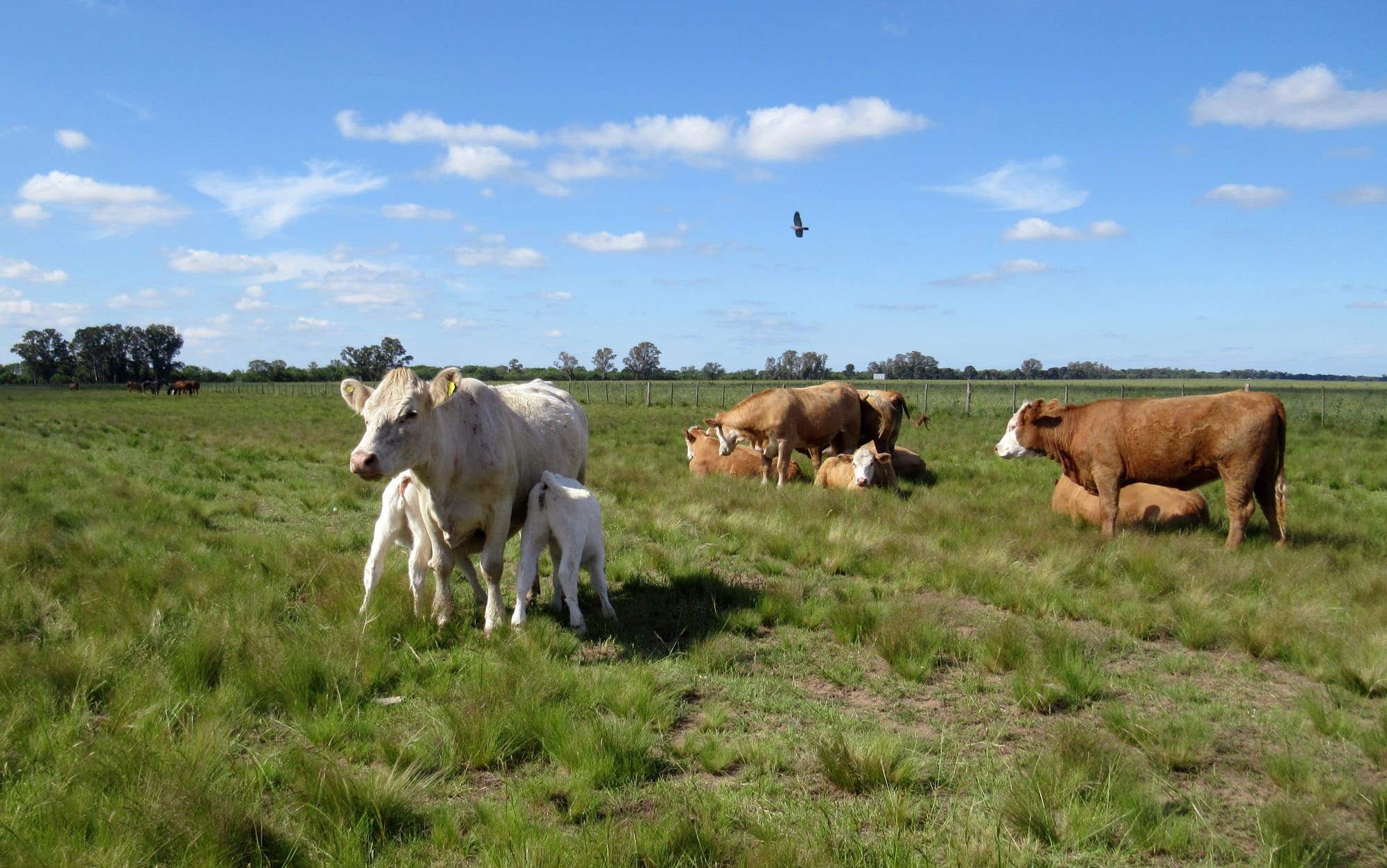
Long time readers know I have a special place in my heart for Argentina, after spending a year as a Rotary Club Exchange student in Patagonia. Of course, I’ve returned a few times since then – including a visit in the midst of a periodic currency collapse and devaluation. Which is not to brag about how amazing the wine and churrascos are (particularly when you get a significant discount via the exchange rate) but more to remind readers that this is a phenomenon that the Argentines are quite familiar with. So the news that Argentines, nervous about a falling peso, were buying dollars and putting even more pressure on the Argentine central bank (and further hastening the pesos decline) was unsurprising to me. What was surprising was that the US Treasury was going to step in and try and protect the Argentine peso. More surprising was that this was the brainchild of the US Treasury Secretary (who is not Pete Hegseth’s younger and drunker brother, but rather Scott Bessent, someone intimately familiar with currency markets from his time working with George Soros when they “broke the Bank of England”.) That’s right, Scott Bessent’s biggest investing win is essentially the exact opposite of what he is proposing to do as the Treasury Secretary. Of course, then he was “investing” his own money (or at least his bosses’ money alongside a sizeable chunk of his own money). Now he is investing our tax money trying to protect the Argentine Peso (if that is really the purpose of the bailout here, which is an open question), when even the Argentines have seen the writing on the wall.
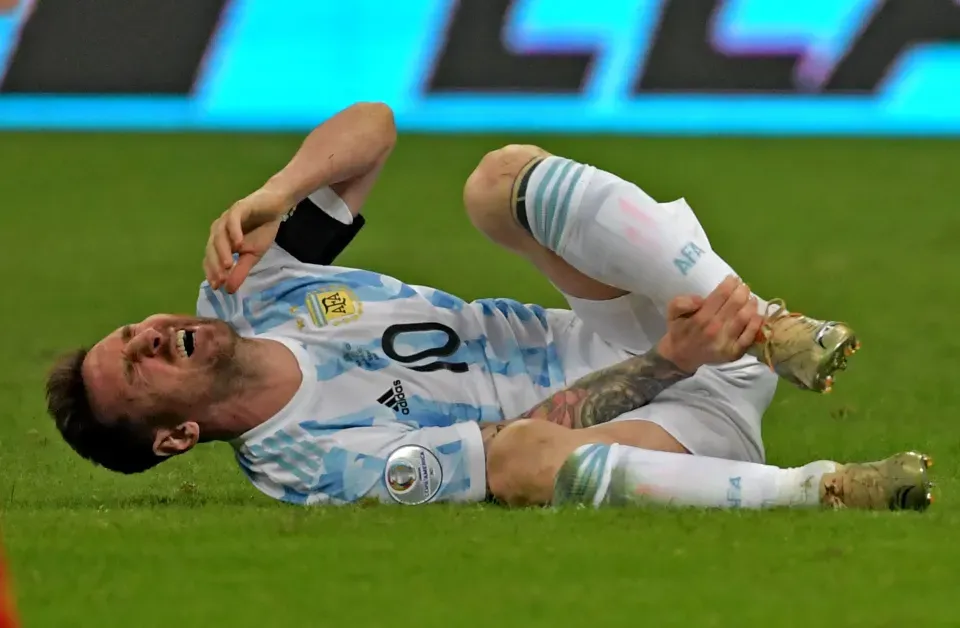
Also, this lets me laugh about two things: (i) Trump’s comment that the Argentines are “fighting for their life” and (ii) Argentine beef imports. First, no, they are not fighting for their lives. I love the Argentines and wish they didn’t have as much experience with financial crashes as they do, but I can say for sure that they will land on their feet (or if not on their feet, then in good enough shape to be able to take the penalty kick). Te Quiero Messi! Second, I laughed last newsletter about how Trump was rewarding cattle ranchers by imposing a 50% tariff on Brazilian beef, and suggested that the cattle industry contributions paid off. Whelp, count that as me getting it wrong, because quadrupling the Argentine beef imports in an attempt to drive beef prices lower is causing some serious consternation among the cattle ranchers and their congressional representatives. Since I basically no longer eat beef (except when I am in Argentina) I am not that concerned about beef prices. Although as all my regular readers know, I get a lot of sustenance from schadenfreude! I guess the invisible hand of the market has now been supplanted by la mano de dios! And that is wrap, as we will dance off into the sunset with a flashback for me to Argentina, and perhaps an introduction for many of you to Argentina’s most popular style of music…nope, not Tango, but Cumbia!
Maradó, Maradó
That is, of course, the best (of many) Argentine songs about Diego Maradona. In case the embedded link doesn't work, I highlight a few of the best lines and link the song again here: Todo el pueblo cantó/ Maradó, Maradó/ Nació la mano de Dios/ Maradó, Maradó/…Ole, ole, ole, ole…/ Diego, Diego!