
International Bonding
The US and Japanese Treasury Departments and Central Banks bond over the difficulty of controlling yields, we take lessons from some recent IRS tax guidance related to ETFs. But we ignore the war/non-war; though we don't ignore corruption this time!

Pardon Season
Let’s start with just a short complaint about how disheartening I find a certain kind of corruption that has become endemic in our economy. I suppose it’s not the corruption per se which is disheartening – after all, it’s always been (and will be) here. But the brazenness of the pardons (or early releases, or commutations, etc.) extended to the corrupt parties – and because I am a huge dork – the law-and-economics implications of those pardons is distressing!! As you might suspect, it was the news of Elizabeth Holmes being freed from prison early that triggered me; although Trevor Milton – who rolled his truck down a hill to sell stock – is another amazing recent example. And I am not even going to dive into the various slaps on the wrist that Elon has benefited from (e.g. “Funding secured”). Now, is my perspective influenced by my age? For sure - I remember the Enron execs going to prison for years. My perspective on Elizabeth Holmes getting an early release is also skewed because I thought she’d be the poster child for the defining lesson about corruption in our age; namely, (i) defrauding the already impoverished is barely noticed (and even more rarely punished, although I guess we could go back to the discussion of Luigi Mangione from an older (and still unlinked newsletter)); (ii) defrauding the government is sometimes rewarded (I would note that Senator Rick Scott and Senator Bill Frist, are two examples from the same company!!); but (ii) defrauding the wealthy and powerful will still result in meaningful punishments (Bernie Madoff, for example, died in prison). Until the Elizabeth Holmes pardon, I was under the impression that targeting and defrauding (perhaps, more crucially, embarrassing) lots of powerful people on the board of her company, Theranos (which literally did not have a product), was crossing the line. But with both Milton and Holmes, it appears that there may be no more lines left! I know this sounds preachy and whiny, but the economy needs rules! This is not ‘Nam, Smokey! And from a law-and-economics perspective, it is precisely the white collar crimes and sophisticated frauds such as those perpetrated by Holmes and Milton that should have clear rules and certain punishment. Why? Because if anyone is taking a coolly rational approach to the risk vs. reward of crime [a generally troubling presumption I admit] it is definitely the white collar criminals like Elizabeth Holmes. It is not the people who commit crimes of passion, or recklessness, or desperation; [although maybe the desperate small-time drug dealer’s other options are so bad that they are, in fact, making a rational choice, but don’t hold me too that!]. So the lesson that Holmes can walk free will reverberate the most with those individuals who find themselves with a decision about defrauding investors and the public and weakening our economic institutions on a massive scale in exchange for some short-term gain (albeit usually enormous) for themselves. And that is something which – if it continues to go unchecked – will not redound to the benefit of the economy or the markets or really anyone. Anyway, I am sure I will have to revisit this when Samuel Bankman-Fried walks out of prison in a year or two, long before his 25-year sentence ends. Hopefully I will be less preachy then, but no guarantees. I do wonder if SBF (or anyone close to him) had any thoughts on law and economics; I mean do they teach that at Stanford where his both parents were law professors? Oh, and as part of my acknowledging my biases, I'll gladly admit that (i) I did not get into Stanford Law and (ii) I may have been a little jealous of Elizabeth Holmes because she has a deeper voice than me. Her voice was fake too, as you probably knew (described in detail in the podcast, The Dropout). Much like Tom Waits, a fact which I did not know until recently. Although I like Tom Waits, so maybe that bias is not overpowering…
Musical Interlude I
An obvious segue, but I haven’t featured any Tom Waits songs yet (and I have started keeping track of those, as opposed to references to The Big Lebowski😊, which may become uncountable eventually), so here are two of his songs which I love. Because some people don’t like Tom Waits' voice, we've got a cover by The Devil Makes Three.
Cold, Cold Ground puts the classic, gravelly Tom Waits voice on display (although he almost lets it slip away at the end of the very first line, it sounds to me?).
Come On Up The House. I love this up-beat version, which keeps the piano from the original front and center, even while they give it their own distinct flavor. A wonderful cover. But here is the Tom Waits original too.
Maybe that is the end of the “fun part” of the newsletter [if mourning the death of consequences is fun] or at least the cathartic part. Because now we are diving into bond yields! But if that sounds too boring, you can skip to the next musical break for the far, far more thrilling section about how ETFs work and updated IRS tax guidance (you don’t want to skip that, I know, because you do find it secretly fascinating 😊).

Do ye yield, Sir! Or shall I sweat for you?
The financial (and sometimes the regular) news continues to be abuzz about bond yields spiking (10y near ~5.25% and 30y near at ~ 5.6, both close to multi-decade highs). But do we need to sweat the increasing yields? [Oh, and the scene from Henry IV, Part II from whence comes that line is just gratuitous Shakespeare; disappointingly, it doesn’t relate to this discussion at all and I spent too much time trying to dredge up even tangential relevance]. First, I’ll reiterate that I don’t think individual investors should be responding to bond yields by changing their allocations between bonds and equities, particularly at this point in time. After all, bond yields are supposed to already take into account expected inflation in the future – i.e. if the market expected inflation (and the Fed Funds Rate) to quickly drop down to near zero again, then the yields wouldn’t be that high. Of course, some have opined the spiking bond yields are a good thing (the whole piece at the Overshoot is worth reading if you are interested in this!). And Warsh is promising strong action on inflation (which has been both/and creeping back up/stabilizing at a higher than target rate - maybe in the 3.6% range?) which means that he does not intend for the Fed Fund rates to drop soon.
But an interesting dynamic relating to bond rates (and interest rate control) has been in the news frequently – namely, Scott Bessent intervening in the Japanese bond market (in an attempt to prevent spiking Japanese bond yields). And a reader of this newsletter (hat tip to reader who wishes to remain anonymous!) noticed it and wondered about it – as well as passing along a pretty decent NYT article discussing the Japanese phenomenon (with a slightly more alarmist headline that I might chosen, then again I am not selling advertising by attracting eyeballs so…). But the primary point of the article is both accurate and interesting: if the Japanese bond yields continue to climb, it is likely that the Japanese investors (including large institutional holders like Japanese pension funds) who have money in the US Bond market will be more inclined to reinvest their bond income (their coupons) in Japanese Bonds (in part due to home bias, no doubt). But it’s not clear that this normal capital flow would necessarily be an abrupt process (given the size of the respective bond markets, etc.); after all, responsibly run pension plans aren’t known for moving with reckless speed. To borrow the author’s slightly-forced cultural reference [also, how forced does a cultural reference need to be before it is inappropriate? Actually, let’s not investigate since I’ve probably done it too many times too…], this slow withdrawal of bond income and reallocation to Japanese bonds is the tide receding. But obviously, the tide going out isn’t the cause of damage in actual tsunamis. And here, the risk to the US markets posed by an unwinding of the “carry trade” likely doesn’t really relate to the Japanese investors and pension funds reallocating to higher yields at home. That is because the “carry-trade” has been primarily used by financial market players globally as a way to borrow cheaply in yen and invest in the US markets (bonds and equities) in dollars. And there have been hiccups before; the article points to the Aug. 5, 2024, turmoil in Japanese and US equity markets and worries that more of these hiccups may occur (presumably her basis for suggesting that the unwinding might hurt her reader’s personal finances).
But unless you, dear reader, have personally borrowed in Yen and leveraged up using those funds to purchase enormous quantities of US bonds, let me assure – you are going to be fine so long as you don’t do “anything” when the next hiccup occurs. Hiccups can be scary for sure: a 3% drop in US markets might wipe out $60K, 90K, maybe (if you are lucky and have been investing for a while) $150K+ of paper gains in your accounts. But as long as you don’t respond emotionally and sell to lock in those losses (by then keeping your money in cash) then you almost assuredly won’t even remember that a carry-trade hiccup occurred [and, if you are lucky, you might completely forget what the carry trade is😊]. For example, I am in the industry and pay pretty good attention to the markets, and I was just happy I remembered it happening in 2024 generally – but had no idea of the time of year. The other lesson comes from reflecting on the fact that the Nikkei dropped 12%; for me, it’s a good reminder to use broadly diversified international equity ETFs and shy away from more specific geographically targeted ETFs. It is a lot harder to ignore a 12% drop in (even a part of your portfolio) than it is a 3% drop!! And those 12% drops will definitely lead to margin calls for the market participants who have levered up using “cheap” Japanese Yen borrowings. And for me (and you, and nearly everyone) the goal is to ignore it all and keep investing and focusing on more interesting parts of life (if you also find things more interesting than the YEN-USD carry-trade; and I swear I do – despite writing way, way too much on this topic already!).
Musical Interlude II
Alright, let’s move on to actual personal finances (or at least a little closer). But only after another musical break, to buttress our spirits, which we will start with the Beatles' classic “Tax Man”. I actually don’t have many Beatles songs in my regular rotation, but every so often I definitely binge on them for a bit! And this one always brings a smile to my face. Despite the fact that a lot of the ultra-wealthy have figured out to avoid the tax rates that the Beatles were complaining about.
"Don’t ask me what I want it for/ unless you want to pay some more" [We aren’t using that money to bomb children, right? Don’t answer that!]
And we might as well make this an all English musical break – so here is the “Only Band That Matters” doing a great song that some of the lawyers quoted in the section below might do well to consider. The Clash’s cover of “I Fought The Law” was written by Sonny Cricket, and then made a hit by the Bobby Fuller Four, which you also have probably heard.
Now, arguably I could have picked The Clash original “Police and Thieves” from that same album, although it is not quite as apropos. Perhaps a better song?
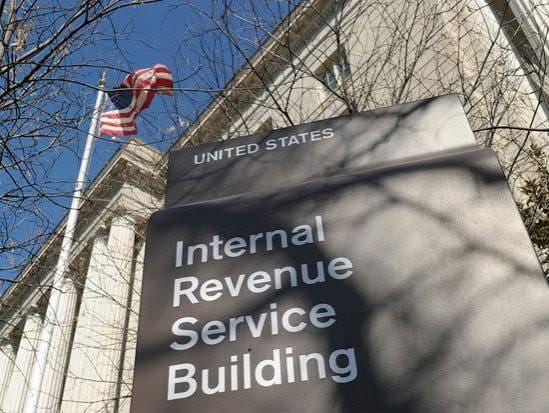
It is (I assume) a chestnut of creative writing advice that you should never start a chapter with extensive quotes from IRS tax guidance circulars, particularly if you would then feel the need to elaborate cross-reference the relevant parts of the IRC. So suffice it to say that the IRS has recently highlighted some concerns with a couple of tax strategies that are broadly related to ETFs (Exchange Traded Funds), which is my (and every reputable investment advisory firm’s) go-to investment vehicle in taxable accounts. So, we are skipping IRS quotes and I’ll try and provide background on ETF and some context (which will grossly oversimplify things as always). [I am pretty sure my readers who work at the IRS did not draft that guidance, or I would have felt compelled to quote it and praise its incisive and concise phrasing].
The background, then! Professional investment managers have long realized (without admitting) that index investing outperforms active investing over the long term, and frequently over the short and medium term too. But index investing doesn’t create the fees that buy the yachts (even if it pays the bills). Plus, finance is full of people who enjoy fun games full of esoteric rules where you can win massive financial gains. So what were the professional money managers to do, when investors began to choose Vanguard’s cheap and efficient mutual funds? Well, one step was developing the ETF, which could be purchased by anyone (since it is on an exchange) and which has certain tax advantages (and ease of use advantages) versus mutual funds. The tax advantage is the most important thing in this conversation; ETFs do not (basically) ever have to sell an appreciated security and realize a capital gain because they can exchange those securities with others in the market with no tax consequence (a “heartbeat” exchange). Mutual funds can’t (as easily) and thus they will at times pass along capital gains to the mutual fund holders (which does not make these holders very happy). Vanguard actually created some havoc for many people not too long ago with passing along significant cap gains taxes. But soon everyone had ETFs, and competition meant the fees earned on those kept dropping. Accordingly, smart and motivated financiers started developing additional products with similar traits and the same general goal: matching market (or index) performance but in a manner which realizes tax savings to increase the after-tax returns to the investor (and enough to justify higher fees, obviously).
For example, for many years the big investment and money management firms would run their own private exchange funds (example linked is Cache, a stand-alone firm, but all the big money managers had/used these). They were called exchange funds not because they are traded on an exchange but because they were proposed as a way to exchange one concentrated position for partnership interests in a more diversified fund which typically was able to closely track an well-known index and which allowed you to defer realizing those capital gains on your original holding for a long time (and/or replace those with capital gains on the new fund interests). For example, if you worked at Google and had accumulated significant taxable capital gains you could exchange those shares for interests in a fund which tracked the Nasdaq 100 more broadly. Other firms also started offering “personalized index funds” to try and replace ETFs, which would use algorithms to allow you to seamlessly invest in the same 500 stocks that the S&P500 ETFs (or mutual funds) were invested in (in smaller amounts, using fractional shares and benefiting from $0 trading costs). This allows (when it works well) individuals to realize taxable losses each year, while their portfolio grew just like an index fund (you may have seen this with roboadvisors, i.e. Betterment and Wealthfront).
The most sophisticated and wealthy investors took advantage of super, super customized, but broadly similar approaches. For example, Bloomberg’s story on AQR gives the details [gift link] on what is basically supercharged personalized indexing, but using leverage on both the long (buying) and short (selling) side to generate tax losses even while the portfolio grew with the market. And this Bloomberg story [Gift Link] about the inventor of the Hot Pocket similarly highlights what is basically a supercharged exchange fund as mentioned above - now the super wealthy can basically create their own ETF and fund it entirely with a massively concentrated stock position (using Internal Revenue Code (“IRC”) 351) and then avoid enormous capital gain by combining that with the heartbeat exchange which - reminder - was the basis for the original tax efficiency of normal ETFs (i.e. your VOO) by which the ETF manager can dispose of appreciated stock without realizing a gain.
The IRS’s recent guidance has highlighted the most abusive practices – but we haven’t seen any enforcement yet (unsurprisingly). One lawyer quoted by Bloomberg seems to think that the lack of current enforcement action means, basically, and “it’s all good, nothing to worry about, come get your capital gains washed away today”. But, uh…hmm…I may be naive, but that wouldn’t be my approach to advertising that my business is primarily setting up soon-to-be-punished IRS tax shelters. He probably does have a bigger boat than I do though.
So, do you need to worry? Not right now. Why, because most readers won’t be directly affected by the IRS guidance immediately (if ever) because the cost of setting up your own ETF is pretty high (so you need to get to a certain total level of assets for it to make sense). And as you’ll see below, some of the most aggressive long-short tax aware strategies are already becoming unavailable. But it is worth noting that the rules wealth mangers are using are pretty core to how ETFs work – it’s just clever financial maneuvering within existing rules. But the problem [isn’t this always the problem?] is when people say things like “There is no reason to stop…it’s tax free, and we all do it in different ways, but this is a clean one that works”. Whelp, that’s a good way to get the attention you don’t want – and by the way, if your only motivation is to avoid taxes, buddy, let me introduce you to the economic substance doctrine. Do I expect this to eventually force ETFs to recognize more capital gains (as mutual funds must)? Not really, but you never know. But we could see policy changes which could dramatically scale back how easily even the merely comfortable (and not super wealthy) could take advantage of some of these things. For example, the exchange funds mentioned above don’t use IRC 351, but a different IRS rule applicable to partnerships (IRC 721). But could new rules target both IRC 351 and IRC 721 to try and (clumsily, perhaps?) decrease the overall deferral of capital gains taxes on these large concentrated positions? Similarly, AQR’s supercharged personalized indexing approach (widely lauded as cream of the tax-aware indexing crop of products) is directly in the cross hairs – but might some other less-sophisticated personalized indexing (or leveraged) strategies get caught up? Apparently, both Fidelity and Charles Schwab are somewhat concerned, as they have ceased allowing new customers into various of these tax-aware long-short funds (though no pause in normal personalized indexing).
So even though this hopefully won’t affect you or me directly (and our normal ETFs will continue to be safe), I do think the saga highlights another good lesson – there is really no need be on the cutting edge of all of these fancy things. I mean, really, we don’t. All of these supercharged strategies the IRS is focusing on are the most aggressive versions of easy to understand strategies with effectively zero regulatory risk – i.e. use ETFs rather mutual funds in taxable account, use personalized indexing if you want to try and create some additional taxable losses (especially since the costs of personalized indexing continues to decrease; though there are some downsides to personalized indexing that have nothing to do with taxes). And lastly, as a broader lesson, it is a reminder that as regulatory schemes get more and more restrictive and/or complex, people who really care will hire smart lawyers or hedge fund managers to creatively find work-arounds. But you generally don’t have to or really worry about it – and you’ll still probably benefit (just maybe not quite as soon or quite as much). When a really good improvement comes along – for example, the ETF vs. the mutual fund – you’ll get the benefit. I am a little more ambivalent on the “normal” exchange funds (because of long lockups they entail) and personalized indexing (because of the historically higher fees associated). My suspicion with personalized indexing, however, is that those strategies are becoming commoditized just like the ETFs were and thus will be even more broadly accessible and useful).

And because I don’t want to focus only on clever finance workarounds, I felt I had to share an example from a wildly different world that nonetheless brought me joy. Also, that might be a good way to wrap-up a pretty boring newsletter! With a hat tip to Reddit, I learned that the Polish mail monopoly was based on a 50 gram weight limit. Below that weight, the regulations dictated it was a letter and thus subject to the monopolized postal service (with concomitant inefficiencies, waste, and high fees). Above 50 grams, it was not a letter but a parcel, and any parcel service could deliver it. And then an upstart package service decided they would simply start attaching small (50 gram) pieces of steel to all letters, and delivering them as parcels (at a lower rate and better service quality than the government monopoly). I absolutely love it; apparently it was so wildly successful that that Polish Redditors recalled that everyone had tons of those metal pieces throughout their houses from all the parcels (true? who knows? I don’t know enough Poles apparently!). Don’t worry, the monopoly is being replaced by the oligopoly – since Fedex is buying that former upstate parcel delivery company. Conveniently enough, this also allows me to throw in – at the last minute – an interesting etymology tidbit related to the mail (and Shakespeare at the same time!).