
May the Force be with SpaceX
In which we touch on Tesla, speculate about SpaceX, complain about corruption (both large and small-scale), and commend the competition authorities (Ticketmaster break-up incoming?). But we we start with some short thoughts about “long term” investing.

There is a new book (here’s the Bloomberg review) about long-term investing (How to Get Rich in American History) that is definitely aimed at the individual investor. And I admit that I find economic history (and investing) interesting overall (though I recognize most people, you included, may not be as enthralled); for example, I thoroughly enjoyed Piketty’s Capital, but…it’s not exactly top of my list for recommendations either on my website or to my friends. So why am I mentioning a book purportedly about “economic history” here? Well, this is the sort of book which tends to get a decent amount of attention in the financial press – it “feels” weighty, well-researched and thoughtful – plus, it hints at enough uncertainty about future investment returns to (maybe) spark a purchase from investors with big nest eggs who are worried the short term security of their portfolio and their planned retirement. Now you won’t catch me complaining about a book which warns readers against recency bias (as the Bloomberg Review notes at the outset) because it is true that the recent past might not predict the near-term future. But neither does the ancient past! And I don’t think economic history (particularly a 300-year time frame perspective) is too useful for individual investors, generally, and maybe counter-productive for investors who are concerned about the near term.
Of course, I say all of this as a big believer in being a “long term” investor, but for investors nervous about the short term, a book about the long term isn’t useful reading. Why? Because (i) the long term is different for everyone, (ii) the psychology of investing is frequently the hardest part for individuals, and (iii) it ignores (or is rather contradicted) by other guidance which is also quite relevant, to wit “sequence of returns risk”). I’ll focus on (i) and (iii) here (which are clearly somewhat connected), but if you are interested in (ii) then see the sidebar below which highlights the Psychology of Money. First, the “long term” is different for everyone – yes, the primary concern for nearly everyone reading this is ensuring that they have sufficient money for their preferred standard of living for as long as they and/or their partner/children are alive, with some various additional preferences for 2/ charitable giving and 3/ family gifts/legacies. But I don’t think I know anyone personally who says they are a “long term investor” because they actually concerned with their current portfolio’s performance over the next 300 years (other than perhaps as theoretical exercise). Really, the long term investing period for most people is maybe (at most) a 50-60 year period (and frequently) a much shorter period of maybe 35-40 years (and I am being generous, by including pre-retirement years). And that period starts (and obviously ends) for everyone at different times, none of which are 200-300 years in the past (or the future). Accordingly, this brings us to the commonly warned about “sequence of returns risk” which is quite simply, the risk that the near-term results directly surrounding an individual’s date of retirement (or more precisely, the date an individual begins to “draw down” on their investments). If the market is “down” before you start drawing/spending your investments (again, typically retirement age) but you still pull the trigger, history suggests that you are probably golden. If the market nosedives right after you start drawing down on those invested assets, however, then you are likely going to suffer from “sequence of returns risk” (though it can be mitigated).
The consequence: well, you might have to adjust your spending in retirement (or face the real risk of running out of money or, more likely, being unable to achieve many of your other charitable or legacy type goals). What does that sound like to you? To me, it sounds like everyone should really want to avoid retiring right before the market nosedives. Which means that, in fact, the near-term results matter a whole, whole lot to the individual. So who cares about the last (or next) 300 years, if the first 5 years after (or 2-3 years before) my retirement are the “most important for” me. I mean, I could probably enjoy a retirement with sharply reduced spending… you know, lots of trips on my bike to the library to get more economic history books. But not exactly ideal! So, yeah – be a long-term investor when you are investing and accumulating. But when you get to that time frame when you switch from accumulating to drawing down, it is completely reasonable to be concerned about the near-term investment returns and sequence of returns risk). Ideally, though, you will have already thought about various approaches and/or planned to manage that risk (there are lots of approaches). But buying an economic/investing history of the last 300 years which purports to help you think (and feel?) about the near-term is not one of them.

Tesla Updates:
So Tesla just released results a couple weeks ago which were better than expected on some measures (with some significant caveats, e.g. accounting for tariff refunds, which I suspect we will see turning up frequently in questionable situations going forward with others as well). The stock was down on the day after earnings (significantly), and then up, and then way went way higher (probably?) because of their announcement they are starting mass production of their electric semi-truck, but...really, it's not that important… since earnings and most announcements are kinda boring (regardless of stock price impact); what I found way more interesting was that Musk finally admitted that an enormous number Teslas sold with the explicit promise (all the way back to maybe 2017?) of being “hardware-ready” for full self-driving are - actually – not going to be ready for full self-driving without significant hardware updates (new chips, new cameras, more cameras, maybe more?). Now this is not surprising to people who have been following the FSD saga – a cohort which, I suspect, is primarily those fools who were optimistic and dumb enough to purchase FSD when they bought their Tesla years and years ago. Or is that just my bias talking situation? In any event, Tesla already updated some very early models with HW3 package years ago, which was annoying but (i) there were not many cars that needed updates, (ii) Musk had not been filmed performing Nazi salutes then and (iii) their car sales were growing at a fantastic rate. I leave it to the reader to determine whether (ii) and (iii) exhibit causation or mere correlation. I suspect Musk also suspected that the new HW3 package would actually work for FSD (so the pain was over). But it is clear (and has been for a while) that HW3 is not going to work for FSD. And customers (who have been patient) have already been losing their patience, see WSJ describing the lawsuits that are now being launched(gift link). But Musk’s admission on the most recent earning call – including his suggestion of “building mini-factories” across the US just to accomplish the retrofit – has got to be scary for investors. I mean, I haven’t built any factories (mini or otherwise), but that sounds expensive for what is ideally a one-time update for a slowly shrinking number of older cars. Which brings me to what I really think might happen [and even if it doesn’t – it’s kind of a interesting thought experiment]; Tesla will find it much more economically efficient to offer discounts on new cars, buy-back older cars, or offer cash compensation to avoid retrofitting all the older cars. After all, Musk has shown that his real talent is raising money from investors – so why not just try and raise more money for buy-backs/compensation rather than trying to actually retrofit these older cars (which must cost more).
Which means, ultimately, that if you own an older Tesla with HW3 you might have a somewhat lucrative option, particularly as some class actions are certified and settle or various individual plaintiffs are successful. Because then you will have the option to (i) copy the successful lawsuits and force an easy settlement, (ii) negotiate a substantial discount for a brand new Tesla which actually has FSD, or (iii) threaten to make Tesla retrofit your car! So, it’s a fun, crazy situation at least – not what I wanted when I tried to purchase FSD but better than nothing. And although I am not in the market for a new car, I can foresee a near term future where I put aside my Model Y in a garage for years to see if the value goes up as Tesla has to somehow retire these cars (and their promises) from the marketplace. Plus, if SpaceX gets a 1.5 trillion dollar valuation, and then buys Tesla so he can recombine all the Musk companies under one umbrella, then they will have plenty of cash to buy my car back or offer me a brand new one at a huge discount. Which brings us back to (i) Elon’s penchant for raising insane amounts of money from investors and (ii) SpaceX’s potential IPO. But not before a sidebar on Elon’s semitrucks finally going to mass production (only 8 years too late) and some songs about trucks. Or drugs? Or both, really. But not ketamine.
An absolute classic (dare I say maybe even over exposed, it has felt like at times) but it still has one of my favorite lines (“but if you’ve got a warrant I guess you’ll want to come in”).
What an amazing song by Townes Van Zandt - accordingly, it has been covered by countless artists. Molly Tuttle absolutely kills it, accompanied by Tommy Emmanuel, both with her singing and some superb flatpicking. And Gillian Welch and Dave Rawlings have a nice, slightly slower version. But this version at an Austin City Limits tribute to Townes is pretty fun to watch (or rather, maybe, put on in the background) – White Freightliner (with verses from a young Steve Earle, Lyle Lovett and others) starts at about 49:30.
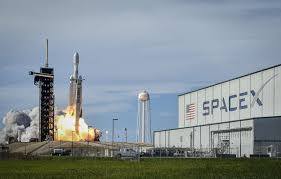
First of all, don’t look for advice from me on whether you should try to get into SpaceX IPO. First, I’ll probably be wrong. Second, the real money you make on IPOs is from before the IPO (preferably like 5+ years before). But it should be obvious that a 1.5 trillion dollar valuation is not going to be supported by the business fundamentals of SpaceX, no matter how competent they are at making rockets (and they are pretty damn good at it apparently, Starship failures notwithstanding). For one thing, SpaceX is an Elon Musk company, so as we have all learned, the business fundamentals are admittedly not a great clue as to what the stock price will be.
But the SpaceX IPO (regardless of whether it is a “success” for IPO purchasers or not) might be interesting to you because it might have an effect on you (and me, and all of the other brilliant primarily index investors like us). Why? Because apparently, SpaceX (or rather their Investment Banks) are negotiating with the Nasdaq (and presumably other exchanges) as to where SpaceX will be listed – and one huge sticking point is how soon SpaceX will be incorporated into the Nasdaq 100 (new “Fast Entry” rules). Typically, Nasdaq requires companies to be publicly traded for at least one year AND have greater than a 10% free float. This is known as “seasoning”; it’s a way for exchanges to ensure that a sexy, new company can’t off load too many shares to the public (via inclusion in index-tracking mutual funds and ETFs) at an inflated price (i.e. before appropriate price discovery has occurred). Now, I don’t want to get too into the weeds of IPOs (and specifically the underwriting of IPOs, with marketing, lock-ups, greenshoes, etc. etc. etc.). But conceptually, the idea is that the underwriters want an IPO to go up in price (not too much) and stay up. Staying up being the tricky part. One way to have the price stay up is to have more buyers enter the market; but it looks bad for exchanges (and their indices) if public investors routinely end up buying new stock in the frothy post-IPO period before the stock goes down (making, effectively, the general public into the “exit liquidity” for the IPO company’s executives/employees/underwriters). Note the tension between the IPO company’s execs, employees, and underwriters and the exchange/public purchasers. With SpaceX (and probably with Anthropic and others as well) the rules may well be changing – or at least are under negotiation with the exchanges (with the general public at the biggest risk of becoming exit liquidity for some of these super, sexy (and $HUGE$) IPOs which might be coming down the line.
Of course, if everything works out great and everyone invested in these indices becomes insanely wealthy then obviously there wasn’t a problem with putting SpaceX and others into the index and, thus, the index tracking ETFs and mutual funds right away). And I’ll go back and delete the above paragraph from the newsletter archives at some point in time. Or maybe I’ll use some of my investment gains to pay a Grok-affiliated AI agent running on a distributed network of orbital datacenters to do it, I guess. But if it goes wrong, then the risk is that these indices (e.g. Nasdaq, if they do indeed incorporate these huge new, sexy, small float IPOs without any seasoning) will be seen as facilitating a huge transfer of wealth to the (already insanely wealthy) insiders from the (less wealthy) individual investors, pension funds, and 401(K)s of American workers. Which is, probably, not exactly what we should be aiming for at this point on the Lorenz curve. Maybe those May Day protests really got to me after all? After all, if the American public starts to believe that the financial markets are fundamentally corrupt, that can’t be good for any long term growth. This issue is starting to reverberate in the press – although most index funds and ETFs are not really considering mechanisms to avoid buying these stocks (though apparently some are, maybe?). (Which could be good or bad, depending on what happens with the success of these companies and what ETFs and mutual funds you are in; but is generally bad for the investing public because it starts to erode the real benefit of index investing, if you have to research how the particular ETF in your company’s 401(K) treats the potential relaxation of Fast Entry rules for various upcoming IPOs. I mean, I like reading about this stuff, but that would be absolutely awful and an enormous waste of time…so maybe time for a happier subject?
Corruption Updates
So, not a a happier subject. But also, no congressional insider trading this episode, which is good? This is more executive branch corruption – from small time bullshit all the way up to Jared Kushner and peace in the middle east. But to start with the small time corruption, it probably isn’t shocking that apparently the President’s dealings to rebuild some fountains in Lafayette park were not entirely on the up and up and, not coincidentally, related to his ballroom, which seems to be a topic about which there is entirely too much news, but for me (at least) isn’t nearly as funny as some of the other crazy parts of the administration.
On a more serious note, however, the story about Jared Kushner’s complicated financial dealings with (it seems like) basically everyone in the Middle East, while he attempts (again) to negotiate a peace deal is pretty horrifying. Democratic Senators are writing some firm letters expressing their horror and outrage… so I am sure it will be fixed soon. On the other hand, I guess the alternative negotiator would entail sending J.D. Vance again? Ugh. Again, some of my concern is humanitarian [not oil/gas prices… though that could be because we have an electric car…hmm], but it is not a promising development that the administration appears to have no shame with the nakedness of the influence peddling and brazenness of the conflicts of interest we are seeing. Kushner’s role in the negotiations (and his current fundraising) isn’t even close to a secret! There are a few Republican Senators who are rightly horrified (the ones retiring or not running again, of course). But the brazenness of this influence peddling (or maybe small “c” corruption) is not good over the long term if we want to maintain a well-functioning and globally respected economy. I guess Netflix got the memo on influence peddling early, however, as they dropped out of the bidding war for WarnerBrothers (CNN's parent company) after they didn't get an invite to the oligarch’s dinner (as the Guardian described it). This sort of influence peddling really shouldn’t be a political issue, because it’s about how the overall economy works (i.e. is it rules and market based or is it merely whomever gave enough money to get seats at the inauguration… actually don’t answer that!) Speaking of potential oligarchic concentrations of power, maybe we should finally get to the good news in the newsletter – and congratulations to some government agencies doing their jobs.
Monopoly Breakup? (and Jones Act again!)
You guys probably all saw the news about Ticketmaster losing big in court. Some of the reporting was a little light on the details, so you might be thinking that finally the flawed FTC and decrepit DOJ teamed up to take a stand against monopolists. But no – the FTC and the DOJ settled with Ticketmaster (which might be corruption, but also might be the human tendency to refuse to admit they were wrong the first time to let the merger go through, and is probably a bit of both). Instead, congrats go to the stalwart State AGs who followed through against Ticketmaster. Which is good, since too often State AGs spend most of their time trying to get news articles in preparation for their upcoming run for Governor, and sometimes at the cost of doing real and substantive prosecutions. For example, the WA AG was in the news recently for – and I am not joking – suing various supermarkets for misleading buy one, get one free offers (only 10 years after Oregon caught them doing the exact same thing). Which sure… this is good. But I sure hope they realize consumers might be more impacted by like… I don’t know… the price of gas or Tesla’s misleading claims of FSD, rather than a BOGO deal on a $10.99 bottle of olive oil, which was actually, previously, a $6.99 bottle of olive oil. So yes, good work by the State AGs (and the Federal Judge hearing the case) on Ticketmaster; at least attempting to stop the ridiculous fees from Ticketmaster and the monopolistic market control they deployed. But it is definitely not over – damages and injunctive relief, in particular, are key here. But this might [if we are lucky] be the kind of case that finally inspires a Federal Judge to order the break-up of a big monopolist even though the combination was approved/integrated long ago (a remedy which has fallen by the wayside in recent decades). After all, consumers of all political leanings have experienced getting screwed by Ticketmaster. And even a small step in the direction of reducing monopolist power would be good for all consumers, even if they don’t go to shows using Ticketmaster. (Then, after that, maybe we can get a renewed focus on monopsonist power – too many companies colluding in their purchase of labor!! More to come in future newsletters, hopefully).
Finally, let’s wrap up with a little bit more on the Jones Act, since I did get a chance to talk to my Admiralty lawyer friend about the newsletter. And her commentary is a good segue from monopoly power to Jones Act because although she quibbled with whether the Jones Act has been entirely worthless (e.g. strategically we need some sort of shipbuilding industry for military and industrial purposes), she did note that the Jones Act really facilitated monopolist pricing, which is maybe a better way to highlight the downside of the Jones Act (and which I didn’t expressly point out last time). Of course, on the other hand, the monopolistic pricing in the shipbuilding industry has gotten so crazy that even the US military is now thinking about South Korean destroyers. And plus, do we even need huge navies anymore? I mean, we definitely still need songs about boats and sailors, but we'll probably be ok. So we will sail away with a few more songs (with nary a sea-shanty to be found).
Orinoco Flow – and no, I did not think I would be including Enya in my newsletter when I started writing, but it’s been a long strange trip apparently. Although not as strange as her weird music video, which is proudly “in 4K” for some reason, though it looks like it was put together by a watercolor artist who just downloaded the free version of adobe acrobat.)
Boots of Spanish Leather - not that anyone is surprised by this song choice either (and definitely a much covered Dylan hit), but if you haven’t heard this very pretty version by Mandolin Orange, give it a listen.
Sailing Away - we end with a song not about sailing or sailors or boats, but with the typical James McMurtry mix of funny, touching and slightly depressing lyrics (“I won’t forget that Chorus light like I did the night before/when I was trying to remember did I lock the front door/ and have I any business being in this business any more”). Add to that some nice accompaniment from Betty Soo on the refrain (“I’m sailing away, I’m feeling faded and I’m not ok, I am sailin’ alone, steering by the stars, but I can’t get home”) and you’ve got one of my favorites from his new album (though I do tend to think McMurtry is probably the best song writer making music right now).